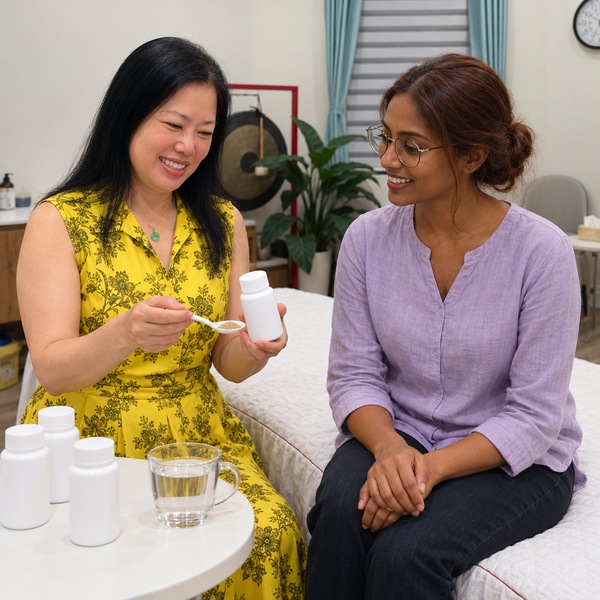
Two people with similar complaints may be given quite different granule products. Ask why your bottle was chosen, keep its label and directions together, and check before swapping, sharing or combining.
Two friends compare notes and discover they both have trouble sleeping, or both feel run down. One has a bottle of herbal granules from a practitioner, and the other wonders whether to borrow it. In traditional Chinese medicine, though, a prescription is chosen for a person, not for a symptom name.
Matching complaints, or bottles that look identical, are no sign that two people should take the same thing.
At the Lane Cove clinic, Dr Christine Shen, Acupuncturist, provides each herbal prescription as granules in a bottle. Every bottle comes with directions written for the person it was selected for. Ask her which product has been chosen and why the instructions read the way they do.
Learning about the history of Chinese herbal medicine can be fascinating, and family recipes carry real cultural meaning. They are context for a conversation rather than instructions to follow. A useful consultation links that interest with a clear, practical decision, which may include deciding herbs are not needed at all.
Store the bottle and its sheet where you will see them each morning. Changes to your other medicines are worth reporting. A symptom you cannot place is something to raise with Christine before touching the dose. Showing the bottle to your GP or pharmacist also helps if you see them while it is in use.
At a clinic offering naturopathy, acupuncture, massage and Chinese herbal medicine, there are often several ways to approach the same concern. Granules are one possibility among many. Share what you have heard from friends or family, and decide together whether a herbal product belongs in your plan.
Copyright© 2002-2026 visuallink© SaaS - Web Hosted Solutions, Design and Maintenance by Visual Link IT Pty Ltd - Software Solutions

Please Login or Sign up to be able to comment